


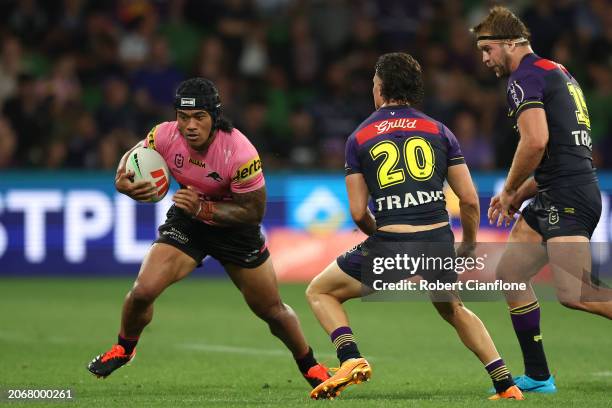

The International Rugby League has approved a substantial suite of rule changes set to reshape the global game from 2026, confirming nine amendments to the international Laws of Rugby League.
Ratified by the IRL Board on January 9, 2026, the changes — recommended by the IRL Laws Advisory Group — will apply across all levels of rugby league worldwide, from elite competitions such as the NRL and Super League through to grassroots and junior pathways.
The objectives are clear: improve fluidity, enhance consistency in officiating, and strengthen player welfare and safety as the sport builds toward the 2026 Rugby League World Cup.
While several domestic competitions may introduce their own variations, these IRL-approved rules set the baseline that all leagues are expected to follow.
Key IRL Law Amendments for 2026
1. Locking the Ball into the Scrum
Deliberately locking the ball in a scrum will now be penalised, with referees awarding a full penalty against the offending team.
2. Scrum Packing Positioning
Loose forwards (hookers) must now pack behind their second-rowers with:
- head between the two locks
- arms wrapped around the second-row
The clarification standardises scrum engagement across all levels.
3. Grounding the Ball for a Try
A try only counts when the ball is grounded by dropping on it with the front of the torso, above the waist and below the neck.
This makes it clear that grounding with the back or shoulder does not constitute a try.
4. Lending Weight in Possession
Players are no longer permitted to add weight to a teammate carrying the ball to force momentum. Referees must penalise the act on sight, closing down a tactic increasingly seen in yardage carries and on the goal line.
Additional IRL Adjustments
Further refinements within the nine-law package cover:
- knock-on interpretation
- tackle technique expectations
- game-flow and restart guidance
All are designed to reduce unnecessary stoppages and minimise grey areas for referees.
NRL Clubs Push Back on Local Rule Changes
Although the IRL’s amendments are now the global standard, the NRL has faced significant resistance to its own proposed domestic tweaks for 2026.
All 17 NRL clubs have formally challenged aspects of the league’s supplementary rule package — which sits outside the IRL law book — including:
Radical Kick-Off Overhaul Proposal
Under the floated NRL trial rule:
- When a team conceded points, it would choose whether to kick off or receive
- Advocates believed it could prevent blowouts by restoring possession to struggling teams
- Critics warned it undermined traditional reward for scoring and risked skewing momentum dramatically
Six-Again / Ruck Reset Adjustments
The NRL also discussed shifting the ruck-reset zone:
- From inside the 40m to inside the 20m
- Result: more six-agains, fewer penalties
Clubs argued the change would:
- Incentivise defending teams to concede early meters
- Reduce tactical kicking and field-position battles
- Further blur the line between set-restart and penalty offences
That pushback has triggered renewed consultation between clubs, the NRL, and the RLPA — making Australian rule tweaks far from settled entering preseason.
Eyes on the 2026 Rugby League World Cup
With the nine IRL laws locked in from January 1, 2026, coaches and players across all nations will prepare under a shared framework — regardless of domestic rule experiments.
Fans can expect:
- clearer officiating,
- faster momentum in games,
- fewer stoppages,
- and increased emphasis on legal grounding, scrums, and tackles.